
They Said that Queens Could Stay
Some thoughts on the real estate market in Covid-era Queens.
Some thoughts on the real estate market in COVID-era Queens

Lately a lot of people are asking me how the market is doing where I live and work, in Western Queens, in light of all the insanity happening in the world right now. Should they sell or wait? Either works, is what I tell them. Looking through my particular Queens real estate lens, as far as I can tell it seems to be pretty much status quo after a brief hiatus. Just like is always has been throughout all the dips and drama and recessions experienced elsewhere. I closed some deals during the shutdown, I also put a property into contract during the shutdown, and now, mid-August, I’m taking some new listings that will be going live in the next couple of weeks. I’m working with serious buyers at the same rate I was before the shutdown in mid-March.
These buyers I’m working with these days are sniffing out flexibility. Sublet policies are important. Outside space is important. Certain amenities like laundry in-unit also seem more important than before.
But talking sellers way down on price (unless the home is priced incorrectly to begin with) is not going to happen in Queens. Never say never, but that is my feeling. There is enough buyer demand that the prices are solid. Do you know why? Because Queens is an awesome place to live. The housing stock here is diverse and so are the price points. It’s attainable. People want to live here because it has a really strong community. While our nation’s economy is certainly not amazing at the moment, it’s definitely not headed for an apocalypse in Queens. We are all supporting each other’s small businesses and we are supporting each other. So, offering apocalypse pricing is simply not going to work.
That being said, there are some great deals to be had out there, but you need to think outside the box. Are you open to co-ops? Are you willing to entertain the idea of renovating? Because right now, I am seeing that there are a bunch of cute apartments out there which have amazing bones—for example my listing in Jackson Heights—and with a little imagination, daydreaming, TLC, and sweat equity you will have yourself one solid investment. Some co-ops have more liberal policies than others, and those are the places you need to watch for. You also need to know how to negotiate the price. That requires a rudimentary understanding how much work a property needs versus what an updated apartment offers. If you can do that, it’s just a math problem to be figured out.
With so many of us working from home, a P(andemic)roject seems kind of amazing if you ask me. I would love to spend my day buffing some floors or playing with the Ikea kitchen design software. People seem to be a little wary of these kinds of projects because they are worried about something adding to their stress. But I say, why not focus on what you can control? Yeah, agonizing over tile colors—or better yet, making that crazy pink tile work—seems like a pretty solid activity right about now, if you ask me.
So in closing, the real estate market in Queens seems, as far as I can tell, the same as it always was. If the property is priced correctly, it goes quickly. Fixer-uppers are where the deals are. Who knows what will happen tomorrow. But the kinds of buyers I have been seeing has not changed very much from pre-COVID till now. The only difference I’m really seeing is the absence of the hobbyist Open Houser since we can’t offer open houses like that right now. Everyone I’m meeting is focused, or in the process of getting focused. As long as the interest rates remain low as they are, I expect prices to kind of linger for now.
The World’s Borough is a place where more and more people want to find themselves, whether it is to invest in real estate or be a global citizen. It’s a place in New York City where people can find a nice place to live that works for their budget, no matter their budget. And that’s why Queens has my heart.

Five Ways Real Estate Brokerages can Help Dismantle Systemic Racism

Photo by Clay Banks on Unsplash
Beginning Saturday, June 20, New York State real estate agents are required to give out the fair housing disclosure form to every customer they come in “meaningful contact” with. This form explains customer rights regarding fair housing laws, and by giving this form, agents imply that they understand the law and do not engage in housing discrimination of any kind.
Because of the very nature of the industry, real estate agents often engage in explicit or implicit discrimination. Yet, none of these agents would ever call themselves “racist.” They speak in codes, talking earnestly and unironically about “working people” or “good people.” When discriminating against families, they talk about the “wear and tear” they believe a family could cause to the apartment.
Some agents swear they are not racist but ignore or “ghost” anyone who has a housing program, or even worse, string them along like a bad date they don’t feel ready to outright reject until someone better comes along. All of that needs to end. This new disclosure form is a means to do that. So yes, this could be a big moment in moving toward a more just and fair housing market in New York. Or it can be yet another empty gesture that will go largely unheeded by our industry. From my perspective, to make this a true success, agents need to feel the support of the brokerage companies for which they work.
Brokerages like my own are stepping up to educate their agents properly on fair housing laws, making a stand in support of the Black Lives Matter movement, and it’s a great start. But it’s not enough. Someday when our society reaches a higher consciousness it will be enough, but for now, we need to take baby steps. This requires understanding what it is like for agents to work on these kinds of deals, and to meet them where they are in their financial incentives and development. Brokerage firms should institute formal policies that incentivize their agents to work with clients who intend to pay their rent in full or in part with public rental assistance programs and vouchers such as Section 8, CityFHEPs, and HASA.
Agents will argue that their reluctance to work with clients using vouchers and programs has nothing to do with race. But, these agents are wrong. Our most fundamental institutions in the United States--including housing--are built on systemic racism and, whether agents have racist intent or not, the impact is to exclude Black and Brown New Yorkers from safe, habitable, and affordable rental housing.
Agents often complain about real obstacles to assisting clients with programs. There is extra paperwork, inexplicable bureaucratic delays, low broker fee payments that come months later, and a landlord’s fear the program funding will disappear. But, brokerage firms can combat these very real barriers as follows:
1) Training: by investing in solid training on rental assistance programs, agents can ensure the paperwork is complete and correct on the first round of submission.
2) Financial Incentives: by providing additional financial incentives to agents, they can afford to wait for compensation from the government that may be below their normal return. This may include allowing agents to keep 100% of the fee as well as offering additional bonuses to those agents who work on programs most frequently. Most agents have to “split” their commission with their brokerage firm, but an exemption from this policy for program rentals would increase incentives.
3) Internal reporting and intra-brokerage communication: by requiring agents to internally report landlords who do not take programs to ensure no other agents at the brokerage advertise units will eventually start to change landlord’s illegal policies.
4) Reporting to Government Enforcement Agencies: by having brokerage companies regularly report landlords who discriminate to the NYC Commission on Human Rights, the NYS Division on Human Rights, and the Attorney General’s Office, agents both insulate themselves from prosecution and cease aiding and abetting in landlord discrimination.
5) Awards, celebration and press: Offer prizes (including cash prizes) and public awards to those agents who work with programs most frequently and assist the most families with rental assistance programs and/or who have other difficult circumstances. Praise these agents and celebrate their work in the way brokerage companies celebrate their top producing agents.
Working with New York City’s most under-resourced communities--those coming from shelter and those relying on rental assistance programs--helps create long-term neighborhood stability and begins to chip away at the racism that permeates the real estate industry. Large brokerage firms particularly need to lead by example to ensure their agents are part of the solution, not part of the problem.
And certainly, it goes without saying, for any brokerage, the price of the commission lost or the cost of an award is far cheaper than a housing discrimination lawsuit.
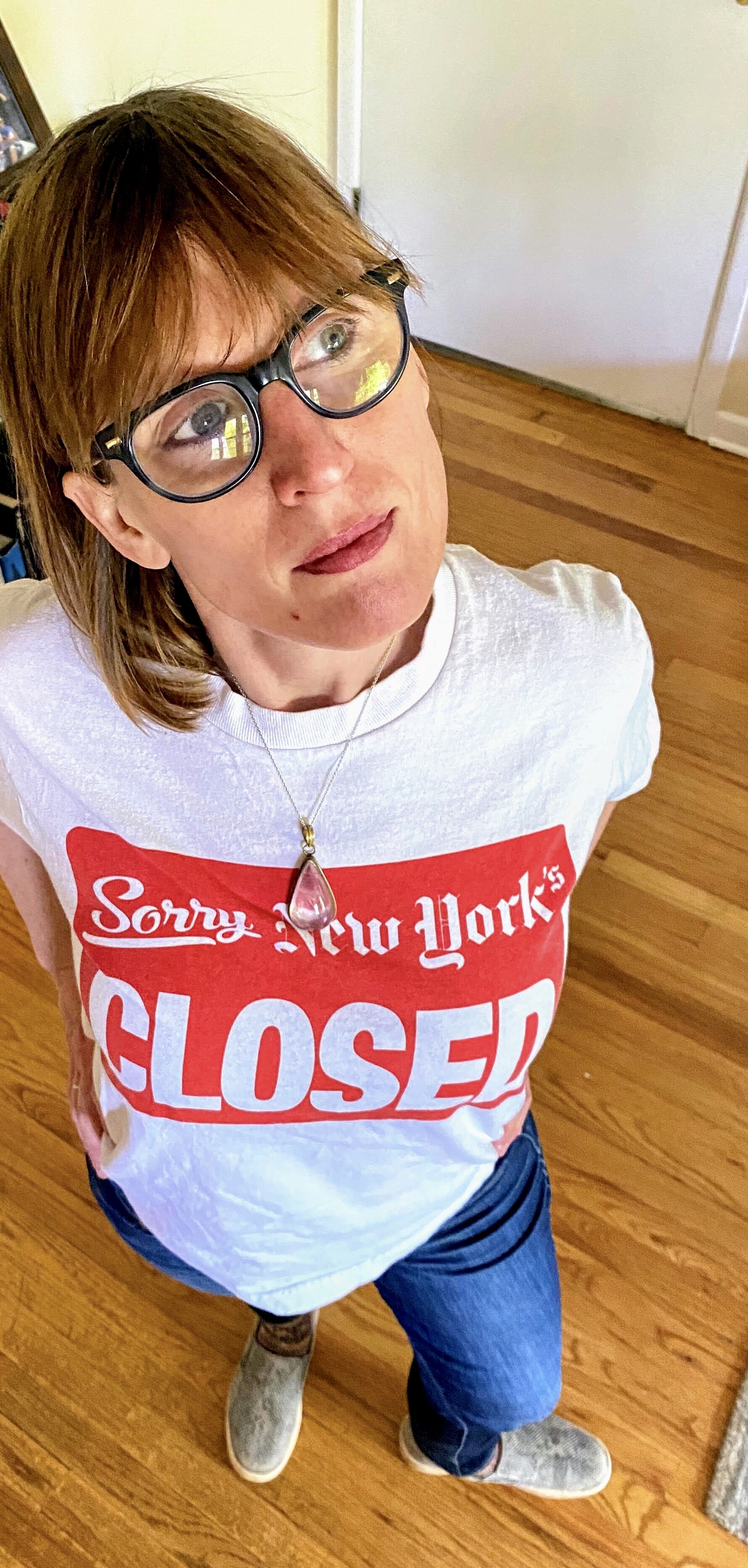
Back to business unusual
Last week, for the first time in a while, I had some balls in the air. Specifically, I have three balls in the air as opposed to my normal, pandemic-related balls, which— in case you are curious— are (in order of importance):
finding food
overseeing remote learning
puzzling
learning how to play The Spirit of Radio on guitar
getting in 10K steps per day
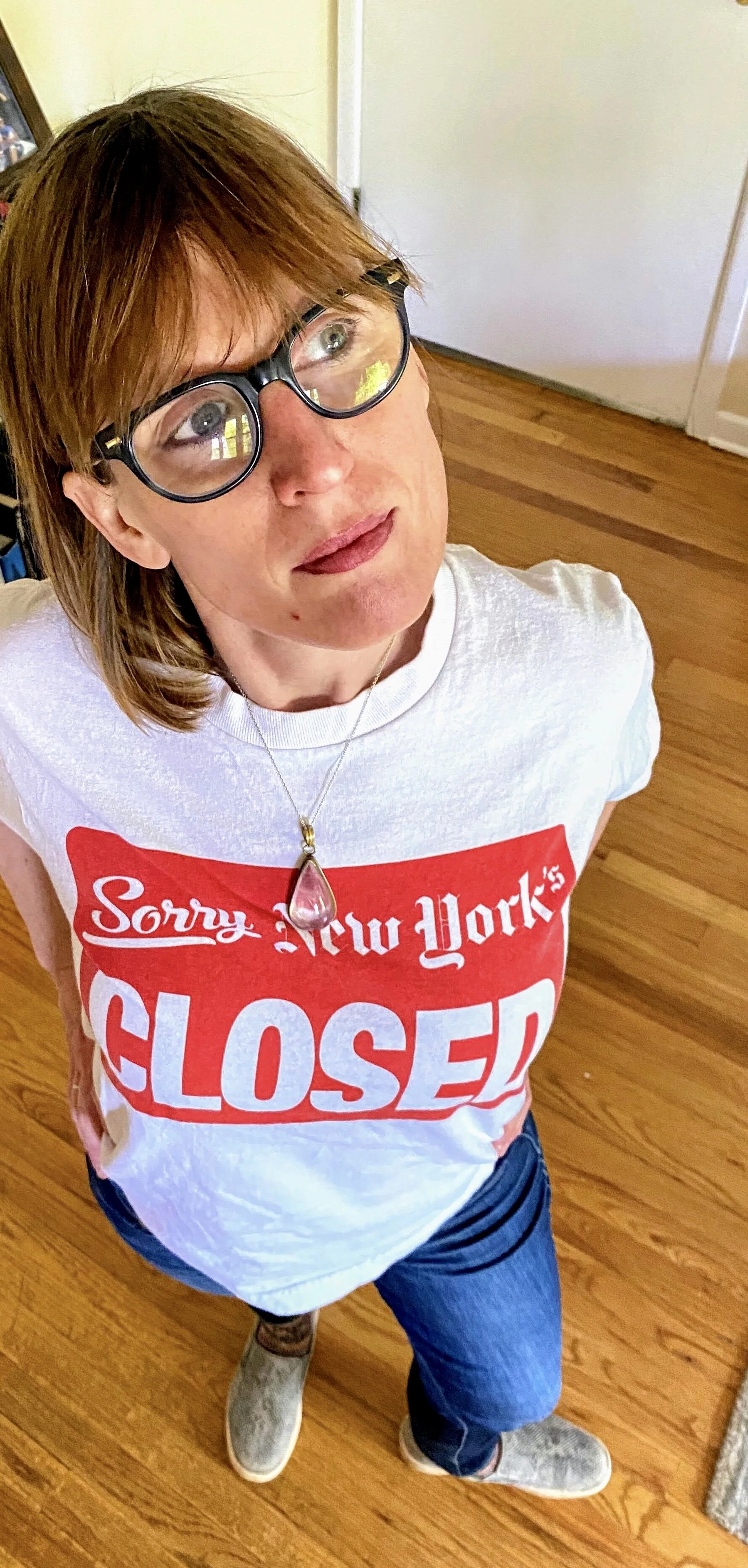
New York might be closed, but I’m working! Sort of.
Needless to say, last Monday was pretty exciting because I showered and put on some work clothes and went to meet my photographer, Steve, who was the first colleague I have seen in person in a long time. While we social distanced, he photographed my new listing and we chatted about how he is getting more work these days but that April— usually his busiest month—had been his slowest. Indeed, my experience was the same.
The executive order from the governor says that while real estate is considered an essential business, we are not permitted to do any kind of in-person interactions. This means that an agent is unable to host a private showing or even to unlock a door. Everything must be virtual. Agents who are caught are fined $2,000. Many of these reports of underground showings are being made by neighbors who don’t want random people wandering in their buildings. And I get that. Honestly, I wouldn’t want that either. There is a legend circulating the real estate world right now, meaning I doubt it’s actually true but it makes for a great story: an agent showed up to a closing to collect his commission check, and he was fined $10,000 ($2,000 for everyone who was there).
Getting a contract signed is a little complicated. I am working with a buyer who has been in negotiations for weeks and weeks. He actually saw the apartment pre-covid but a host of reasons precluded us from being in contract. The latest hold-up? Covid clauses being added to contracts. They are a real thing. And based on my experiences, they are freaking everyone out. As if we need more freak outs right now.
Showing my listing but I’m all by myself. I give virtual tours. I ask customers: would you like to “meet” outside and we can ride the elevator up together? Yes, I literally say that. Everyone laughs. Then I facetime them and apologize that the first time they are laying eyes on me I have a mask over my face. I promise them, I’ll take it off when we are upstairs. They inevitably say: oh, do what makes you feel comfortable. I thank them for being so flexible. But the truth is that it’s all still uncomfortable right now, showing an apartment on a phone.
Working with buyers. I have some lovely new buyers but I haven’t ever met them in person. It’s not too different to cultivate a relationship with people on the phone and video. We went on some virtual tours of apartments together, and it’s just like before, except I am sitting in my pajamas.
And while I’m doing that, the sun is shining outside, and my son is busy socializing with his friends in a Minecraft world they created together. And guess what they are doing?
Building houses.
I miss being out in the world. Luckily I have my little garden to fuss over. At least there’s one domain I can interact with.



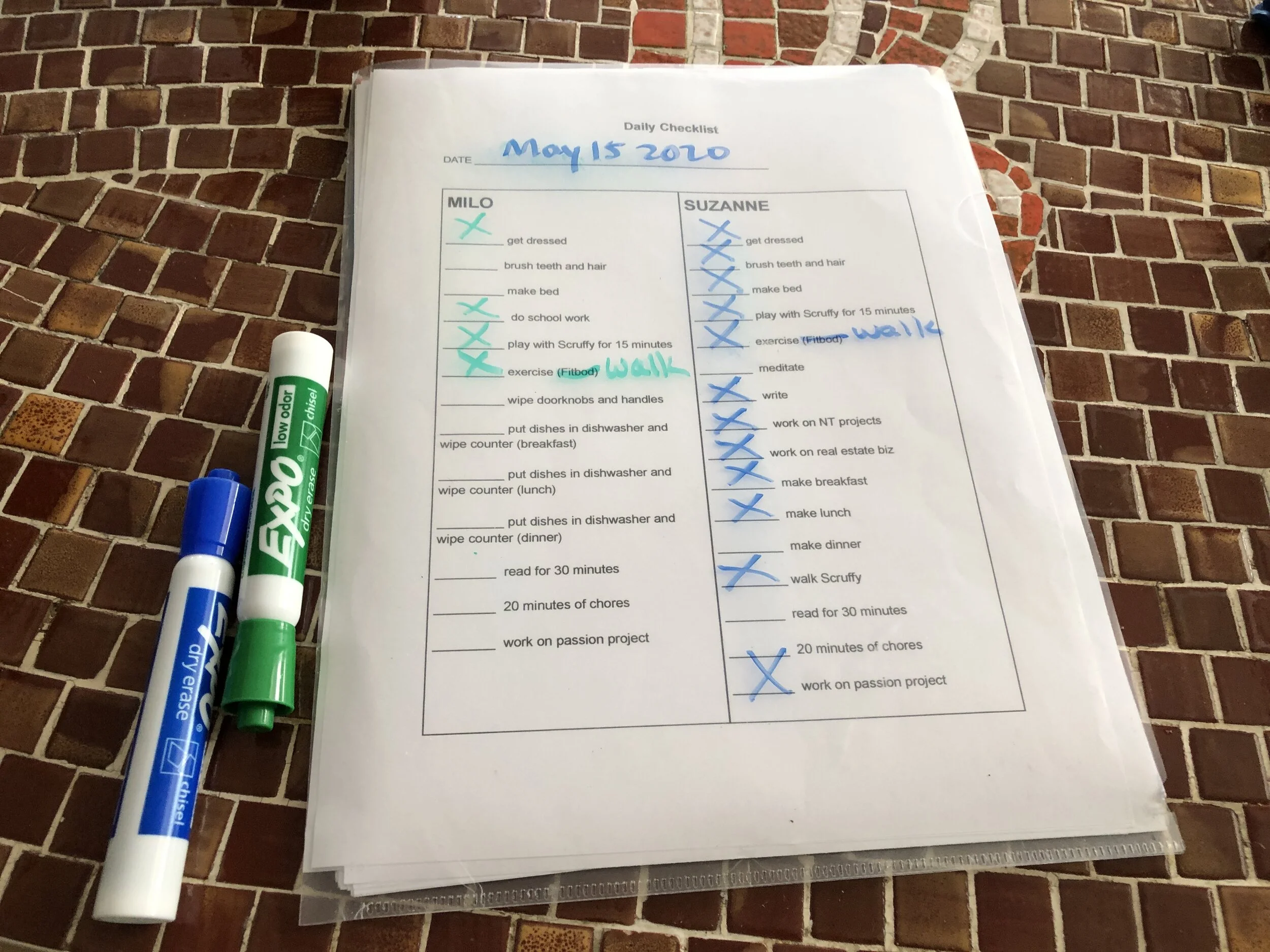
In Praise of Lists
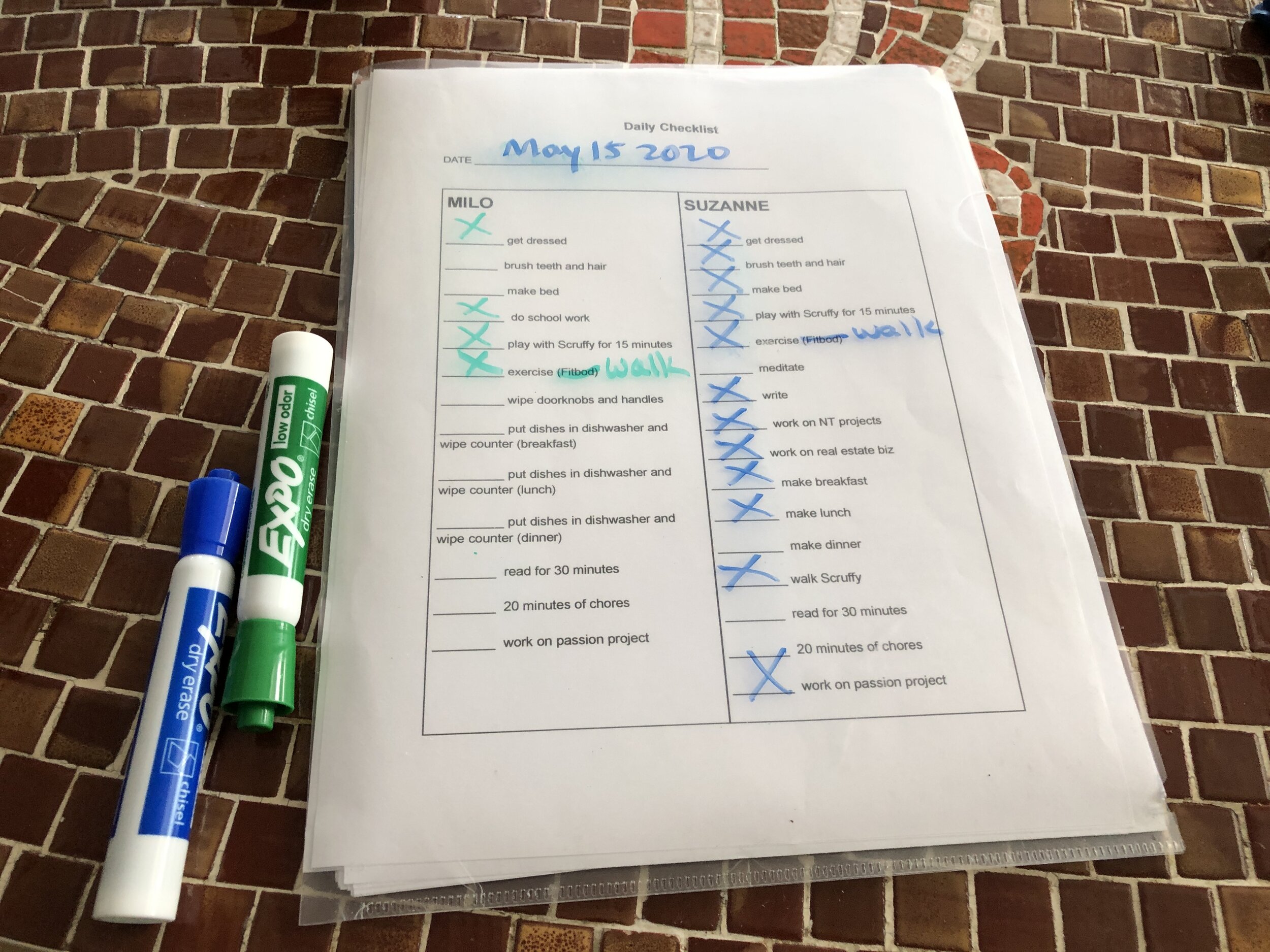
Making lists and crossing items off my list have helped me survive this pandemic so far.
Do you ever look at the clock and wonder what day it is and notice that you are still sitting in your pajamas and it’s 11 am, and you are basically in the same spot that you were sleeping hours before? Does that make you feel bad about yourself? Yeah. Me too. Before the stay at home order, I was always going, pretty much all the time. Lists helped me stay afloat and headed in the direction I wanted to go. I had daily lists, targeted lists (geared toward my home, my son, or places I want to travel) long term lists, lists for the weekend, monthly lists, lists of dreams, lists of goals, and actually, believe it or not, I had a list of all my lists. And I love the feeling of crossing things off the list.
But ever since I started hanging around the house 24 hours a day and facilitating the dreaded remote learning and trying to responsibly ingest the news which vacillates between horrible and terrible, I needed to try to do something to keep me grounded and also feeling like I was accomplishing something.
So I created a new list that’s really back to basics. Like, it sets the bar REAL LOW. And I have to tell you, it has really been a game-changer for me. I put it in a plastic sleeve and use a dry erase marker to mark off what I’ve done, and let me tell you. At the end of the day, I might still be laying in my bed, but at least I know I’m going to have a couple of items struck off my list.
(Not writing this from bed, by the way. Writing from the couch.)

Closings in the Age of COVID
Last week, one of my co-op deals closed, and not to brag or anything, but it felt like everyone was more impressed than usual. It is impressive because it is a very impressive property, of course. But it was also particularly impressive because we closed in the thick of COVID.

We danced the game that was the Jackson Heights real estate market right before the pandemic hit: There was a passionate bidding war, lots of back and forth, conference calls, and a generational and/or technological divide between the practices of two attorneys making the contract. Then the shadowy, terse managing agents who send poorly scanned board applications, with maladroitly worded instructions.
But just days before Cuomo put the stay at home order in place, we had the appraisal for the mortgage. We were all nervous and jumpy around each other: the appraiser. the listing agent and me. By the time my clients got the commitment letter from the bank, everything was closed down. Only essential businesses could be open. My Elliman office had closed. We had no choice but to submit the package 100% electronically.
It wasn’t a big deal, and what I liked a lot was that all the parties were open-minded about solutions. I already had DropBox anyway, so my clients felt good about the documentation being shared securely. We snail mailed the checks and that was that.
But what’s most exciting to me about this story of the electronic board package is this:: we really don’t need paper copies. Co-ops that ask for more than one hard copy of every financial document a person has received for the last six months are being wasteful and irresponsible. So, I really hope that can change. Because being wasteful and irresponsible is not cool. All we need to do is read the news to see where being irresponsible gets you.
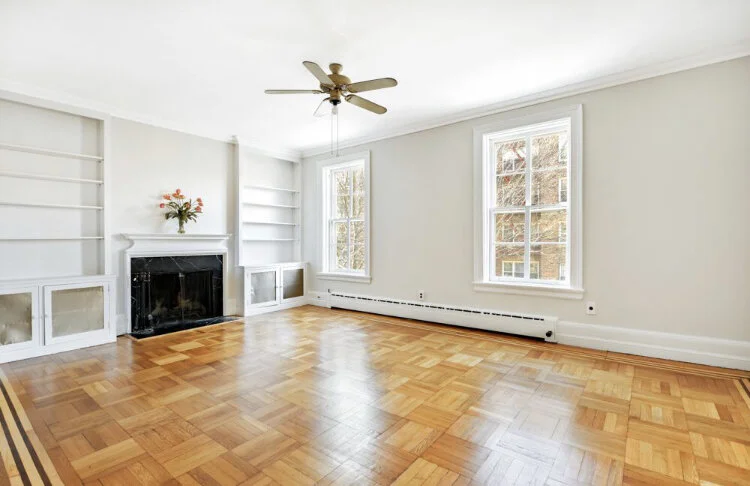
All the procedures that had long been in place for closings now had to be abandoned and we were trying to figure out new rules. The board interview was via zoom. Nearly all the documents were signed electronically. There were a couple of hunts for notaries that were willing to sign documents. But so much was done virtually. Most of it. The co-op’s attorney didn’t want to handle a closing so we had to find someone else who would do it. No one except the buyers, their attorney and the bank attorney were physically at the closing. Normally as a buyers agent I would attend the final walk through and the closing, but this time I did not because I wanted to respect social distancing practices.
Social Distancing is extremely important right now. I don’t think it’s fun and its definitely not great for my business, but it’s necessary for us to do right by our communities. I have heard of agents who are still showing occupied apartments on the DL, but that is not the right thing to do right now, especially in a place like Jackson Heights, which has essentially been the epicenter for the virus in NYC. Showings need to be done virtually or if there are showings, the apartment must be vacant. Masks must be worn. Social distancing is imperative.
All this to say, I am slowly figuring it out, and I’m getting ready to try to get back to work as best I can. I will be finding out more very soon. I have a very cute, vacant studio apartment in Jackson Heights that I am about to have photographed. It will be up on my team’s site soon. I am working with some buyers, too. I will be curious to see what it is like to sell property right now. I’ll be sure to report on that.

Real estate in Cuba: co-ops
I was on vacation in Cuba last week. It was magical. Not only that, but I met a really cool woman from Jackson Heights on a bike tour! What a small world we live in.
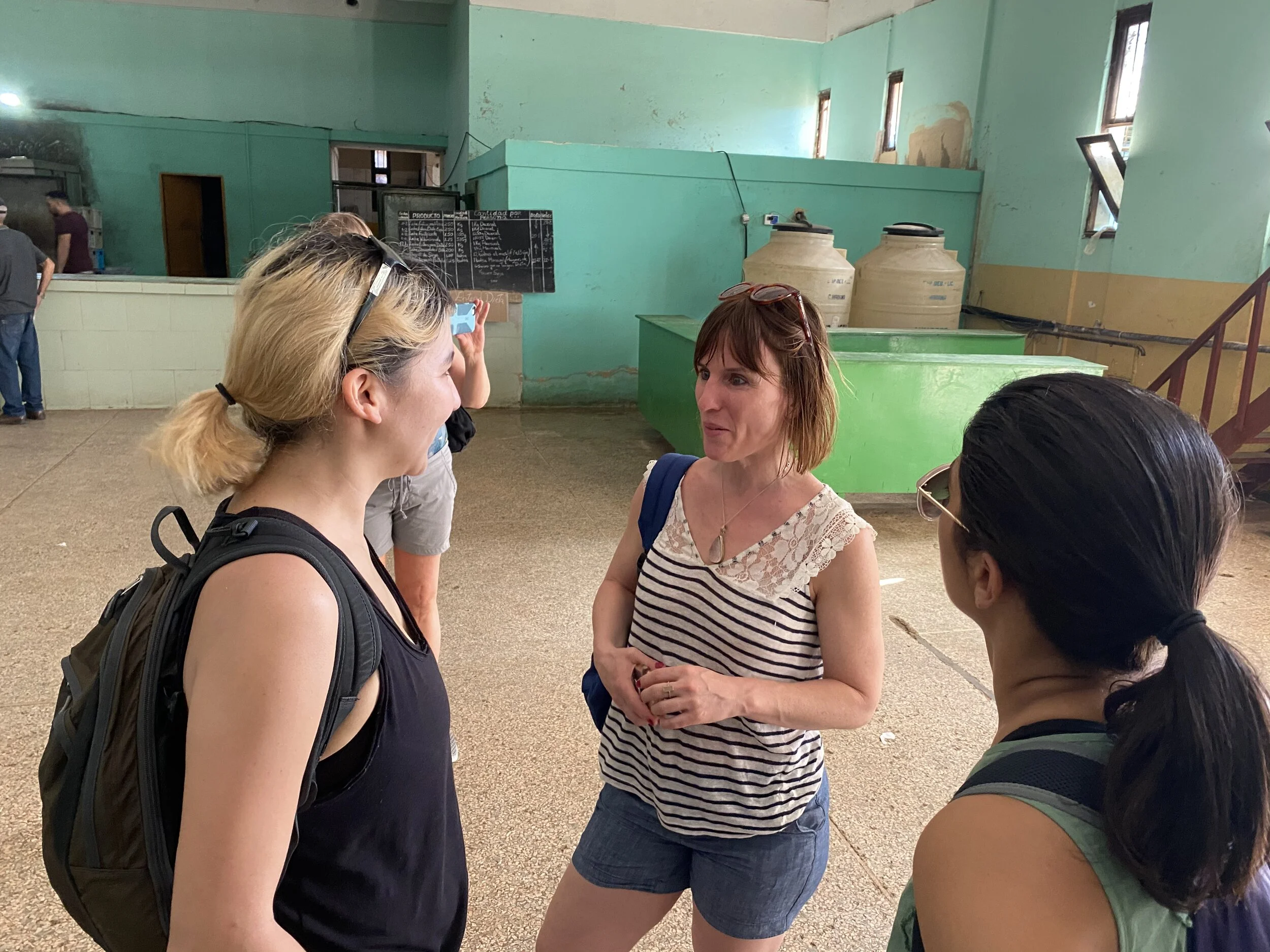
Let’s talk about real estate! Working the room in Cuba.
Naturally, I was interested in how real estate worked over there. I am fascinated by the crumbling Spanish buildings and the Soviet built high rises. Like, how did they figure out who lived where? Who took care of what? Why were some buildings falling down and others looked great?

Can you imagine how breathtakingly wonderful these apartments could be with a little TLC?
The answer was interesting. After the revolution, the people were given the deeds to wherever they were living. If they were living in an apartment building, suddenly they were in business with their neighbors. Just like a New York City co-op!
This had me thinking. Co-ops are really bizarre institutions, aren’t they? Unlike a condo, which is real property, with a co-op you purchase shares in a corporation which holds the deed to the building. And we get into bidding wars in order to go into the business of owning a building with a bunch of people that we do not know, and most likely would never choose to go into business with in any other situation.
Meanwhile, most co-op purchasers literally have no idea whatsoever about what goes into owning a building. Yet, we do it, because it’s generally a more affordable means toward owning property in New York.
Getting a stake in the business is a real process. You have to lay your soul bare to your prospective neighbors by giving them all your personal information. You allow them a glimpse at your spending habits by providing months of bank statements. (“Wow, this person really spends a lot of time at the wine store!”). Perhaps you will need to pen a personal essay explaining your life story (undoubtedly highlighting your selflessness and willingness to work for free), and impose on friends and associates to write letters of recommendation. Then eventually, if you are qualified, will invite to come “interview.” It’s crazy, right?
What do you think about co-op buying process?
Some Thoughts on Housing Vouchers
Over at Neighbors Together, I have been working to support several of our members through the process of getting a new apartment with a voucher. After the arduous process of actually getting a viewing, filling out a preliminary application, and then finally being accepted, the clients are ecstatic. But unfortunately, as I tell them, this is only the beginning of the long, frustrating task of having the rental processed through the agency that administered the voucher.
The process is—to put it poetically—opaque and labyrinthian. Here are some observations I wanted to share.
Housing seekers with vouchers are given very little useful direction by the agencies who administer the vouchers.
This is literally what people are given.
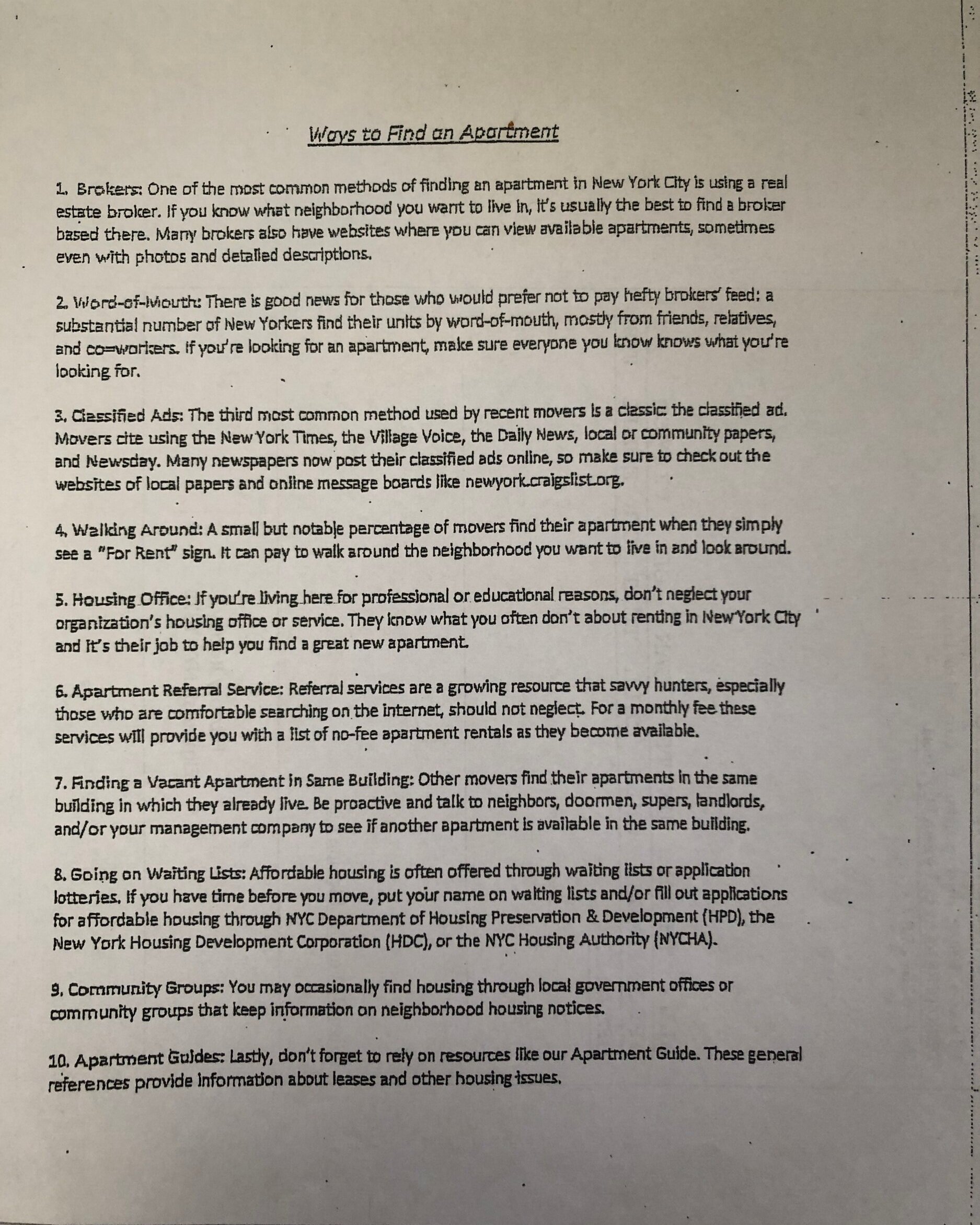
Clearly some well-meaning person put this together. But it is horribly out of touch with reality.
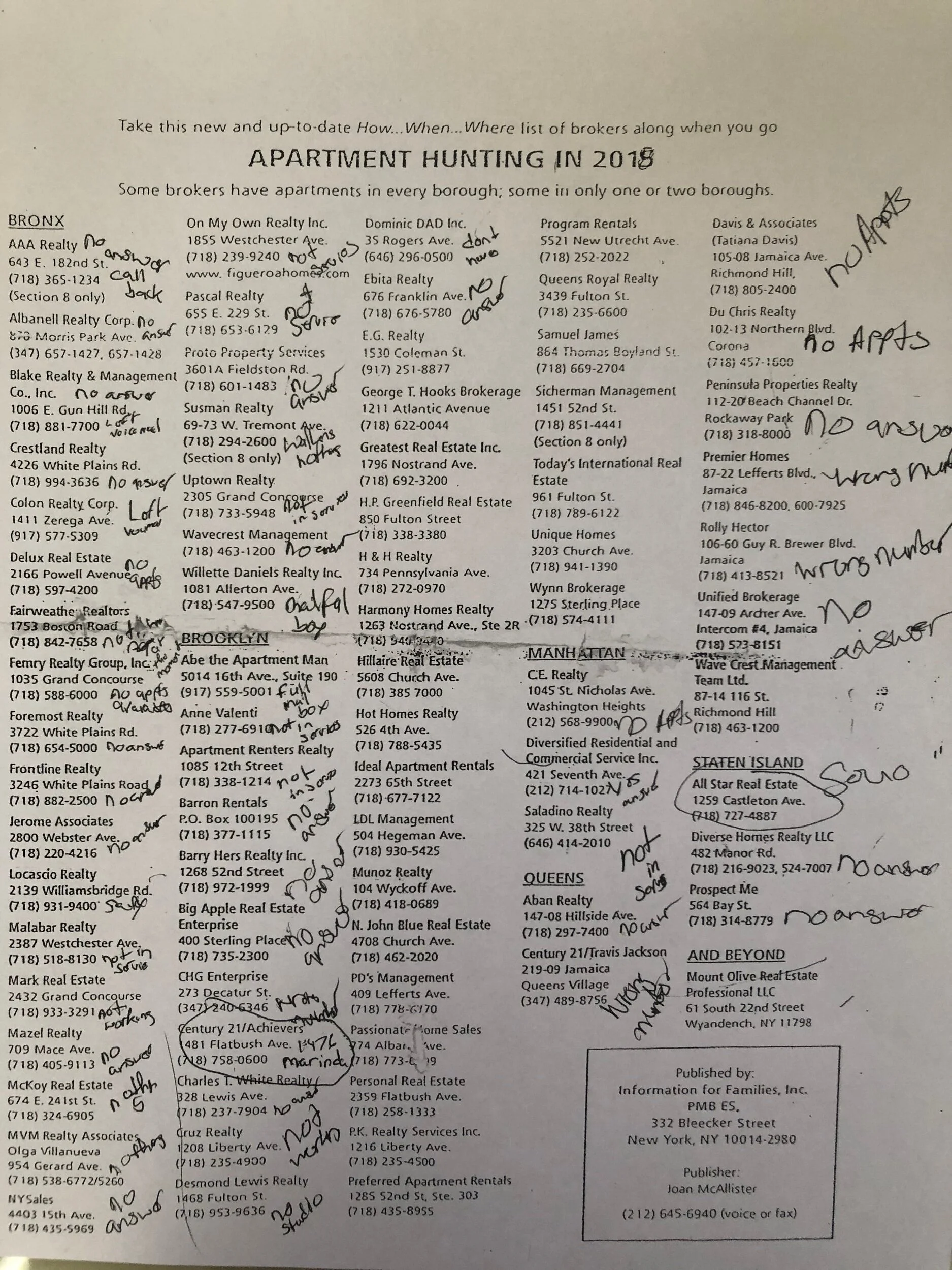
A list of “real estates” that a voucher holder was given to call. Much of the information is outdated or incorrect.
I mean, come on.
Vouchers come with no instructions that I know of. Vouchers holders are told to call up “real estates.” It seems that the agencies who administer these vouchers have no idea how people look for apartments these days, and there is very little communication between the government agencies and real estate brokers.
As we all know, most housing searches today are done online through sites such as StreetEasy and Zillow. The problem here is that these apartment searching sites seem to be loosely monitored and are often replete with discriminatory language and illegal apartments. Most real estate agents who do rentals are completely clueless about how vouchers work and we all know what people do when they don’t understand something. They avoid it.
Then, there is often the real estate agent who blames their landlord client, saying that “Oh it’s not me, I love everyone, but the landlord doesn’t want to deal with it.”
But the fact is, if the landlord owns a building with six or more units, they are required to take housing vouchers in all their units. It’s the real estate agent’s responsibility to advise them about the law and convince them that voucher holders can be wonderful tenants. Because they can. I can think of several people off the top of my head who I feel confident would be amazing, respectful tenants.
But there’s another issue at play here.
Voucher holder deals take a long time and most real estate companies do not properly incentivize agents to work with voucher holders
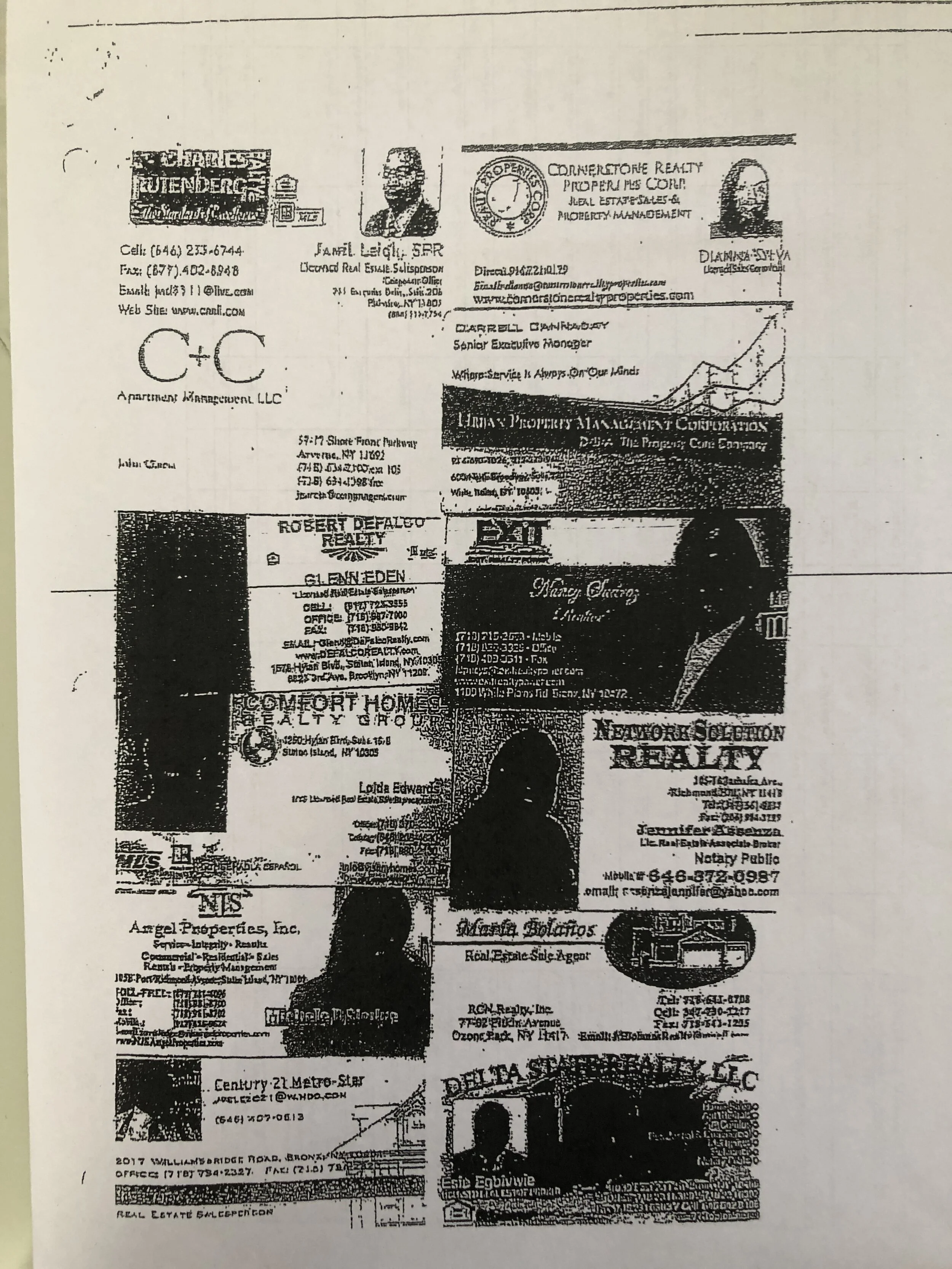
Here’s a worn-out resource list provided to housing seekers. Much of it is illegible.
There are progressive real estate companies out there --- Bohemia Realty comes to mind--- that have adopted company policies that are altruistic and generous. This would change the game if all companies would follow suit and offer special incentives to agents who work with voucher holders. Because the process takes so long, agents should not have to split their commission with their broker, particularly when dealing with vouchers such as Section 8 that only offer a half-month broker fee.
For real change to occur we need to take a holistic view of the process. It seems that right now, real estate agents on the ground are not even part of the conversation. I wonder why that is.
Anyway, back to my list of obstacles:
To find an apartment you need ample access to the internet or a computer
Imagine having to do a housing search at the library on one of their computers. These computers are often very slow. Have you ever tried working on one of those? One time I did, and I swore Never Again. You are allowed to sign up for a half-hour session. Just imagine how much you can realistically get done in a half-hour. (Psst: The answer is: not much.)
Ok, so now I am guessing some of you might be thinking--- well, just look on your phone. Everyone uses their phone to look online. The city has free wifi! Read on.
Many voucher holders have limited access to an outlet to charge their phones
If you live in a shelter, as many of my clients do, there is limited access to electrical outlets to charge your phone. I have found that many also have multiple phones just so they can try to keep some access to the outside world. This makes it difficult to stay on top of showings and to communicate seamlessly with agents and landlords to coordinate showings. I am told that electrical outlets are such a commodity that they are often rented out by shelter residents who have medical machines and are therefore commandeering the outlets. So in the shelter, the guy with the defibrillator is at the top of the pecking order.
It’s possible that your income is too high to receive a voucher yet you don’t make enough to get an apartment on your own
Those are the people who, out of desperation, end up going rogue and taking one of those illegal basement rentals on Craigslist. The problem with those is simple: they are illegal. And the reason they are illegal is because many times they are not up to code, so they are unsafe.
So what can we do about all of this?
If you’re a building owner, educate yourself. Be empathetic about the struggles of our fellow humans. Only work with ethical real estate agents who know what they are doing.
If you’re a real estate agent who handles rentals, be a real estate agent who understands and follows the law. Let’s be compassionate humans first. It’s not always easy to stand up for what is right, but it’s never wrong.
In closing, here’s that Martin Luther King meme that everyone was posting all over the internet yesterday:
Come on, guys. Let’s do this.
Why having a buyer’s agent is a good idea, and why it’s also a good idea to listen to your buyer’s agent
Whenever I start working with a new buyer, when we talk about the fun stuff like where they want to live, whether they want a fixer-upper or a place with amenities, and before we start sending each other listings and I start setting up appointments and we start texting a million times a day, I like to have real talk about finances. I know that finances are a weird thing to divulge to someone you may not know very well, but open and upfront conversations can help make the process much smoother.
The Agent/Client relationship requires faith and trust
A few months ago a very eager buyer approached me to work together so she could purchase a co-op. I was thrilled because I really enjoy working with buyers. However, she didn’t want to give me any information whatsoever about her finances, telling me she would show me proof of her ability to afford the apartment once she was ready to make an offer. But in the meantime, I should do all kinds of running around to help her find her dream home.
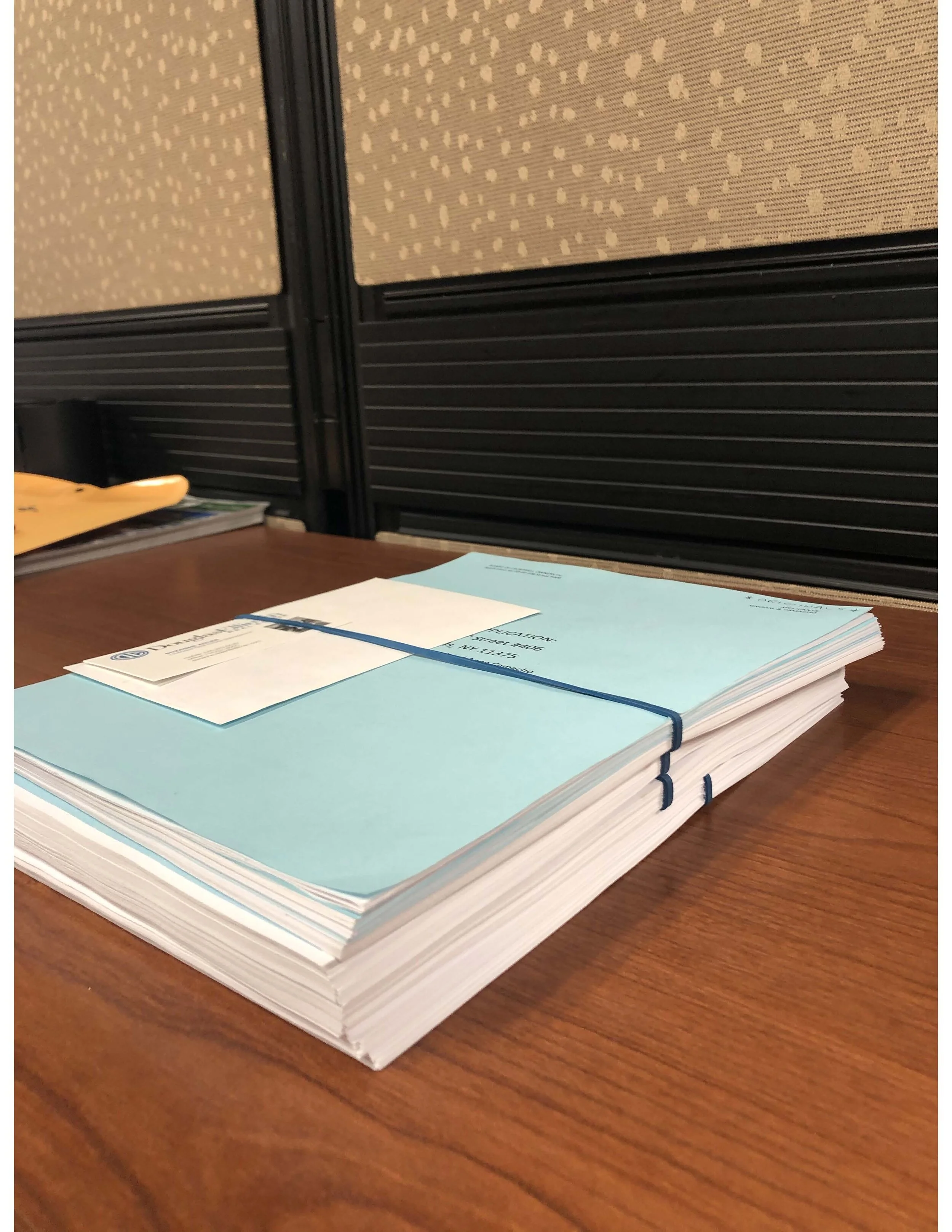
My board packages are on point.
Now, let’s remember some important facts here: Every co-op has slightly different rules. For example, some have strict debt to income requirements, others do not allow gifting of down-payment money, others have different post-closing liquidity requirements. Anyway, I tried to impart all this to this buyer, but she kept telling me she was an extremely private person. I told her I totally respected that about her. I also told her I wasn’t comfortable working together because I felt like I was flying blind, and it seemed unfair. I felt she was asking me to trust her. But her actions told me she didn’t trust me.
My best clients, my most successful clients--the ones that get the apartment they really want--are successful because they listen to my advice. We set up expectations and norms of behavior from the get go. My best clients both communicate what they need from me and also do what I ask of them, knowing that I am only asking because I know what I’m talking about. I want them to be successful, get a good deal, and have fun during an otherwise stressful process.
“I love it when my clients and I are a well-oiled machine of efficiency. You know why? Because everyone loves to work with well-oiled machines.”
Have your ducks in a row
Here’s what I ask of my buyers:
I want them to tell me how they imagine us working together
I tell them they need to find a good attorney who specializes in Real Estate--meaning: someone’s brother in law who also happens to be a lawyer is usually a death wish to a smooth sale.
They give me redacted copies of the following documents (via a secure method such as dropbox):
Pre-approval letter if financing
Last two years of tax returns
Proof of funds
Copy of a credit report run within the past thirty days with all pages
When I see these documents, I can look at them the way that a co-op board would look at them.
Why am I a good person to do this? Well, because it’s my job. I have literally looked at a zillion board packages in my day. So based on this information I can glean whether the buyer would be a good candidate or not. Also, when I go to make appointments at other agents’ listings, I can speak articulately about my buyer, which ultimately makes co-broking much easier.
Then, when we find a place they love and want to place an offer, we can make the offer quickly because we have everything organized.
I love it when my clients and I are a well-oiled machine of efficiency. You know why? Because everyone loves to work with well-oiled machines. Not to mention, when the offer is accepted and the contract is signed, we already have a bunch of the necessary paperwork for the board package.
WHY (I started this blog)
When I started working in real estate after many years as a teacher, I took a lot of classes. Almost every week I had something going on. How to sell, how to be a self-starter, how to drum up business, how to schedule my time…. You name it, I took it. I really wanted to be good at my job and I had no idea what I was doing. I tell you this because from those early days, something that happened in class struck me and I’ve been thinking about it ever since.
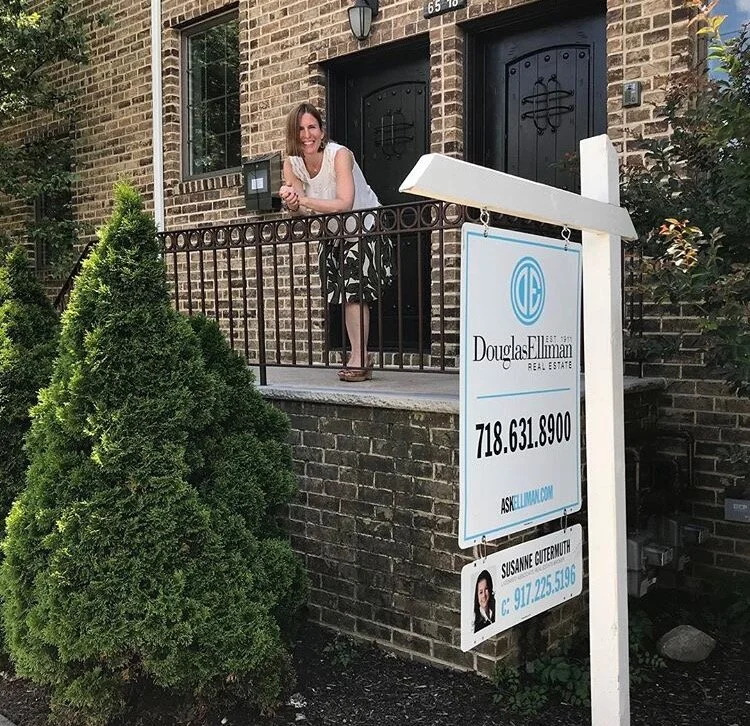
Me in 2016, back when I had no idea what I was doing.
One day, the trainers wanted us to keep asking ourselves, deeply, what our “why” was. The question was: Why are you in real estate?
I said I wanted to help people find their home. Everyone deserves a home.
They kept asking us: But why, why, why?
So, I started riffing, as I tend to do when pressed. I pontificated about my love of the wacky architecture in Queens and how fun it was to do something different every day, and my fascination with meeting all kinds of people. “It’s like I’m an anthropologist except I’m a real estate agent!” I exclaimed.
Someone cut me off. “No, that’s not what your why is. Your why is the money. You are doing this job for the money. That’s why anyone works.”
I shrunk down and kept my mouth shut for the duration of the course because it was back when I didn’t have thick skin. Although I’m much tougher now, as a general rule I don’t like to run my mouth unless I’m confident in what I’m talking about. But, nope. Upon further reflection, money is not my ultimate why. I mean, don’t get me wrong, I like money. I like having money to live and take care of my family. Travel is important to me and you need money for that. I definitely don’t want to work for free, and I cringe when financially able clients try to talk me out of my fee, because damn it, I work hard and I know my worth.
However, money is not everything to me at the expense of doing the right thing. I feel it is possible to do both. I believe in karma. I also really like helping people. I like connecting with people because it’s beautiful to connect with others, and a connection makes the world a better place.
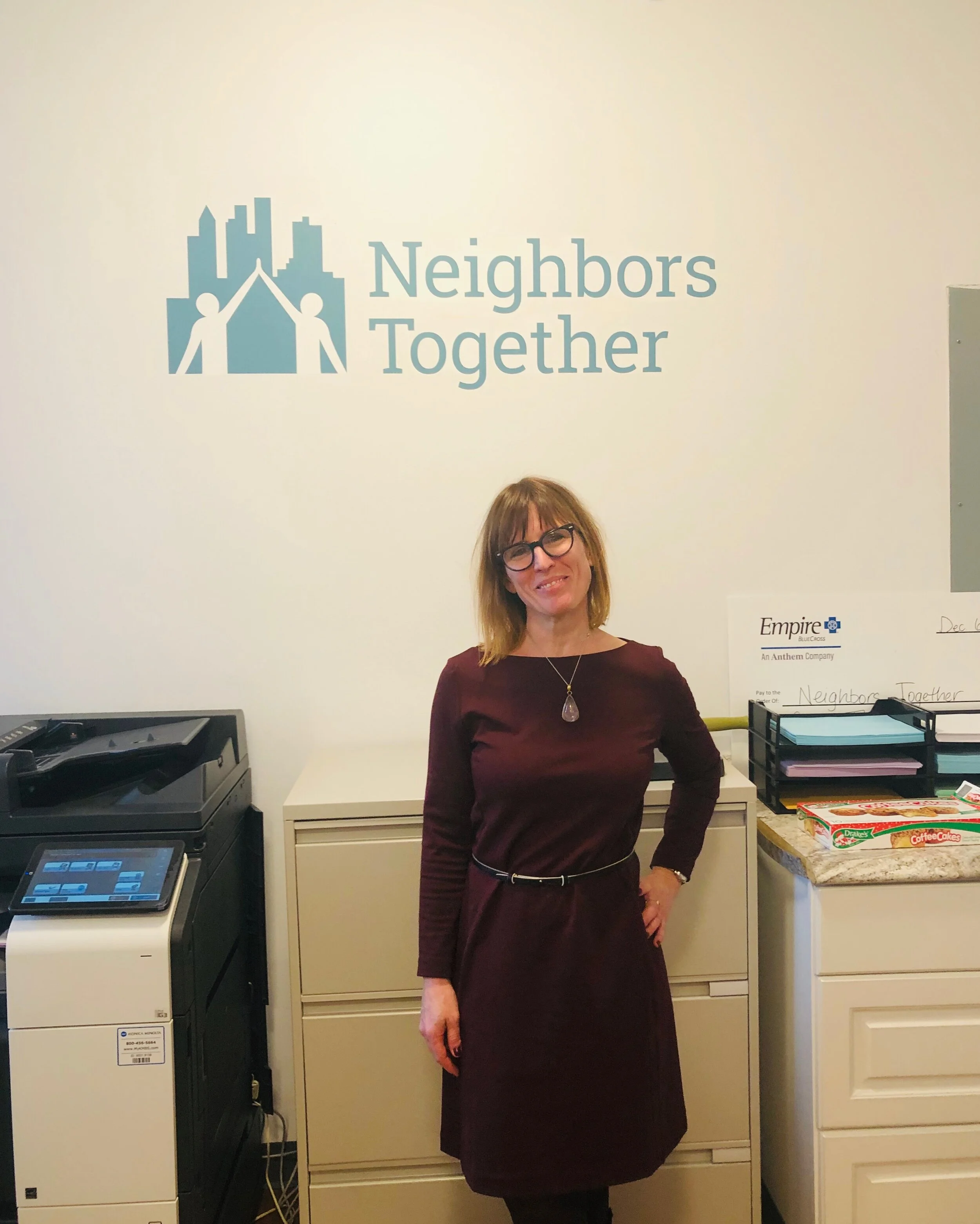
Anyway, I have been thinking about all of this for a long time now. Being squarely in my late forties, I have been taking stock as many do at that point in one’s life, on what kind of life I want to have. This led me over the summer to take a part time job at an anti-poverty organization in Brooklyn called Neighbors Together, where I am a housing advocate, working with people who are struggling to find a place to live with a housing voucher. It’s not easy for people with vouchers to find housing, and I have many observations to share about all that. The discrimination I witness on the regular is heartbreaking. There have also been success stories-- lots of them-- and that is exciting, too. So I’m going to share some of them here, along with some other ideas that interest me. I will also write about the NYC real estate market, and about places I love in Queens, and about being a mom. So I hope you will check back often or subscribe to my newsletter.
Until next time!
Suzanne